
Why do kitchen fitters lose enquiries to showrooms on Google? Marketing for kitchen fitters that wins high-ticket jobs
Last updated: 5 November 2026 · By CodiePi Limited
Marketing for kitchen fitters works when Google can see where you fit, what you fit and proof that you do it well. Independent fitters often lose to showrooms and national brands because their Business Profile is set up wrongly, their website has one gallery page and few reviews mention real projects. Fix those first, then add paid search.
This builds on our general guide, why is my business not showing up on Google?, which covers indexing, verification and suspensions. Here we look only at kitchen and bathroom fitters, where every job is a big decision for the homeowner and the competition includes retailers with far larger budgets.
In this guide
- Why do fitters lose enquiries to showrooms and national brands?
- How should a fitter set up a service-area Business Profile?
- What makes a project gallery work in search?
- Why do reviews with photos matter on high-ticket jobs?
- Which pages does a fitter's website need?
- Which trust signals reassure homeowners before a big job?
- When does PPC for kitchen companies make sense?
- Where can an independent fitter compete with a showroom?
- How does CodiePi help kitchen and bathroom fitters?

Photo by Thới Nam Cao on Pexels
Why do fitters lose enquiries to showrooms and national brands?
Mostly because showrooms are easy for Google to understand and fitters often aren't. A showroom has a fixed address, signage, a clear category and pages for every range it sells. A fitter working from home may have a hidden address, a vague category and one page that says "kitchens and bathrooms" with a few photos.
Google says local results are mainly based on relevance, distance and prominence. A showroom on a retail park scores well on all three for nearby searches. National brands add prominence, because lots of sites link to them and lots of people already know the name.
You can't outspend them, but you don't need to. Homeowners planning a new kitchen or bathroom search in different ways: by room, by style, by problem ("small bathroom ideas") and by trade ("kitchen fitter near me"). Showrooms tend to win the product searches. A well set up fitter can win the searches about fitting, installing and project work, which are the ones that turn into quotes.
That is the core of marketing for kitchen fitters. Stop trying to look like a showroom and become the clearest local answer for installation.
How should a fitter set up a service-area Business Profile?
If customers don't visit you, set up as a service-area business, remove your address and list the towns you genuinely cover. If you have a showroom with permanent signage that customers visit, Google treats you as a hybrid business, which can show the address and a service area together.
Google's service area help gives the details:
- You can set up to 20 service areas, by city, postcode or other area.
- Your overall area shouldn't be more than about two hours of driving time from where you're based.
- A service-area business can only have one profile for the whole area it serves.
- A location without permanent on-site signage isn't eligible as a shop front.
The two-hours guide matters in marketing for kitchen fitters, who will often travel a long way for a full kitchen. List the places you really want work from, not every town within reach. A service area tells Google you work there. It won't make you outrank a fitter based in that town, which is why area pages on your website matter too.
For your category, pick the most specific option on Google's list that matches the bulk of your work. Google says categories affect local ranking and asks you not to add one for every product or service. If kitchens are most of your work, lead with that and add bathrooms as an additional category only if you offer both.
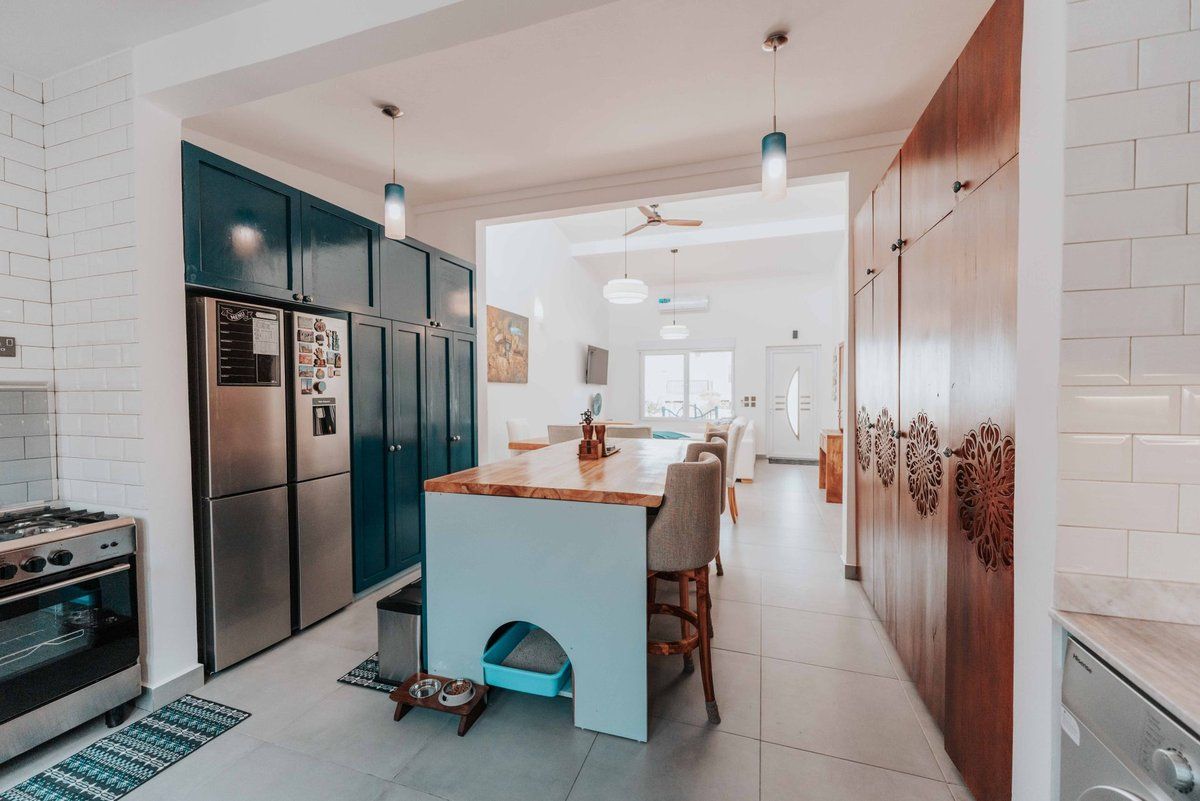
Photo by Keegan Checks on Pexels
What makes a project gallery work in search?
A gallery works when each project has its own short write-up with real photos, the town, the room and what you did. One page of fifty unlabelled images tells Google almost nothing. A page per project, or per type of job, gives it text to match and gives homeowners proof.
Google's image SEO guidance is practical here. It recommends standard HTML image elements, because it doesn't index CSS background images. It says descriptive filenames help a little, alt text is the most important image attribute, and images should sit near relevant text. So "shaker-kitchen-island-wisbech.jpg" with a sentence about the job beats "IMG00023.jpg" in a slider.
A good project entry covers:
- The room, the style and the town (only where the customer is happy for you to say).
- The scope: full refit, layout change, worktops only, wet room conversion.
- Before, during and after photos you took yourself.
- A short note on anything tricky you solved, in plain words.
Compress large photos before uploading so the page stays quick on a phone. Of everything in marketing for kitchen fitters, the gallery is the asset a showroom can't copy. This is where SEO for kitchen fitters and SEO for bathroom fitters overlap most. The same gallery format suits both trades, and a steady trickle of new projects gives Google a reason to keep revisiting the site.
Why do reviews with photos matter on high-ticket jobs?
Because a homeowner spending real money wants proof from other customers, not just your own photos. Google's Maps help confirms that reviewers can include pictures with a review, and a review that names the room and shows the result reassures far more than "great job". Reviews also feed the prominence part of local ranking.
Ask at the right moment, which for a fitter is usually just after the customer has seen the finished room and before the snagging conversation fades. Send your Google review link by text with a short note saying photos are welcome. Don't script the review or ask for particular wording.
Google's review guidance says offering incentives, such as discounted or free goods or services, in exchange for reviews is fake engagement and strictly prohibited. That includes money off the next job. The CMA's fake reviews guidance says businesses must not write fake reviews or commission others to write them.
Your own photos belong on the Business Profile too. Google says photos should be in focus, well lit and represent reality, without significant alterations or heavy filters. It accepts JPG or PNG between 10 KB and 5 MB, and only shows them once the profile is verified. Short videos are allowed, up to 30 seconds.
Good marketing for kitchen fitters treats every finished job as content: profile photos, a gallery entry and, with luck, a review with pictures.
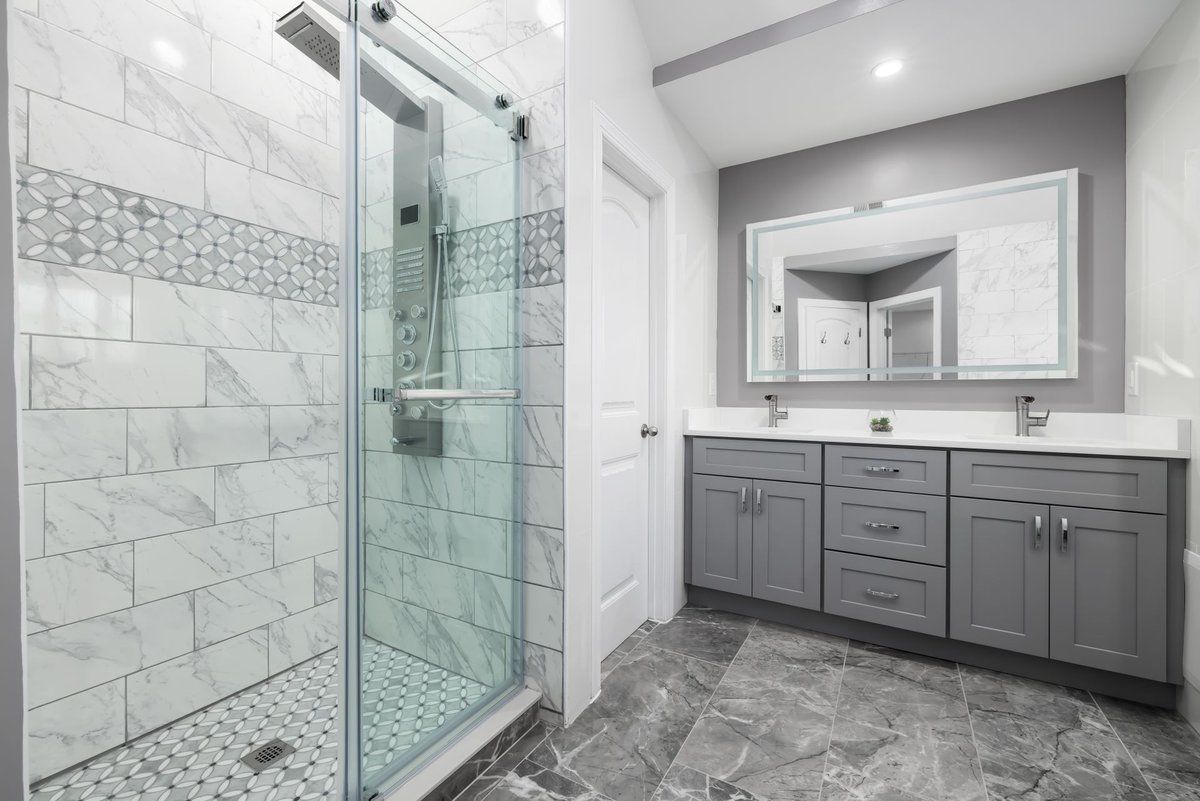
Photo by Curtis Adams on Pexels
Which pages does a fitter's website need?
A home page that says what you fit and where, a page for kitchens and one for bathrooms, a projects gallery, an areas page, an about page with your registrations, and a contact page with a short quote form. Each page should answer one kind of search clearly.
Split by job type where you have enough work to say something real; it is the simplest structural win in marketing for kitchen fitters. "Kitchen fitting", "bathroom fitting", "wet rooms" and "worktop replacement" are different searches. Supply-and-fit and fit-only are different too, and many homeowners search specifically for a fitter to install a kitchen they've already bought. If you do fit-only work, say so plainly, because a showroom usually won't offer it.
Your quote form should ask only what you need: name, phone, postcode, room, rough scope and an optional photo or plan. Say how quickly you reply. On a high-ticket job, speed of reply is part of the sales pitch.
Area pages should only cover places you really serve, each saying something specific, such as recent projects nearby. Our article on whether a new website is still worth it can help if your current site can't support these pages.
Which trust signals reassure homeowners before a big job?
Registrations, insurance details, written quotes, real photos and reviews, shown clearly and kept accurate. Homeowners are letting you into their house for days or weeks, so they want evidence. Only show logos and memberships you actually hold, because displaying a trust mark without authorisation is now banned.
Kitchen and bathroom work often involves electrics and plumbing that fall under building regulations. GOV.UK explains that installers registered with a competent person scheme can self-certify that their work complies, tell the local authority on the customer's behalf and give a certificate within 8 weeks of completion. If you or your subcontractors are registered, say which scheme and link to the register so customers can check. If you connect gas hobs or cookers, HSE says customers should check the engineer is on the Gas Safe Register.
Business Companion, the Trading Standards guidance site, says the Digital Markets, Competition and Consumers Act 2024 bans displaying a trust mark or quality mark without authorisation. Remove any badge as soon as membership lapses.
Trust signals are part of marketing for kitchen fitters, not decoration. Put them on the pages where people decide, next to the quote button.
When does PPC for kitchen companies make sense?
When your profile, pages and reviews are in place and you want enquiries faster than organic search can bring them. Paid search can put you above showrooms for chosen searches in chosen areas. It amplifies a good landing page. It cannot fix a site that doesn't explain what you fit or where.
PPC for kitchen companies is mostly about controlling where and when you appear. Google Ads lets you target countries, areas within a country such as towns or postcodes, or a radius around a location. Its help pages warn that very small targets may only show intermittently or not at all, and that location targeting is a best effort rather than 100% accurate.
For a fitter, a few rules of thumb:
- Target the towns you'd happily drive to, matching your Business Profile service areas.
- Send each ad to the matching page, such as a kitchen ad to the kitchen fitting page, not the homepage.
- Use search terms about fitting and installing, and exclude product research terms if they waste budget.
- Track calls and form submissions so you know what each enquiry costs.
Our comparison of SEO and Google Ads explains how the two work together. Marketing for kitchen fitters usually needs both: ads for speed, organic search for the long term.
Where can an independent fitter compete with a showroom?
On installation searches, local proof and personal service. A showroom wins on product range and walk-in visits. An independent fitter wins when a homeowner wants someone they can talk to directly, fit-only work or a smaller project. Make those strengths the centre of your marketing for kitchen fitters, using the comparison below.
| Area | Showroom or national brand | Independent fitter |
|---|---|---|
| Business Profile | Shop front with signage | Service-area profile, or hybrid with a showroom |
| Searches it tends to win | Product ranges, styles, brand names | Fitting, installing, fit-only, trade near me |
| Proof | Display rooms, brochures | Local project pages, reviews with photos |
| Paid search | Larger budgets, wide areas | Tight areas matched to service areas |
| Trust signals | Brand recognition | Named fitter, registrations, insurance, written quotes |
| Enquiry route | Showroom visit, design appointment | Direct call or quote form with photos |
How does CodiePi help kitchen and bathroom fitters?
We start by finding out why enquiries are going elsewhere, before suggesting anything. Our free audit looks at how your business shows up on Google, the issues costing you enquiries and how you compare with local competitors. There is nothing to pay and no obligation, and we won't promise rankings or a set number of jobs.
The fix might be a profile clean-up and project pages through our SEO services, or a tightly targeted campaign through our digital marketing team. We'd rather fix the basics of your marketing for kitchen fitters before spending your money on ads.
CodiePi is based in Doddington, Cambridgeshire, and works with trades across the UK, mostly online and by phone. Book your free audit and we'll show you what we find.
Frequently asked questions
Should a kitchen fitter hide their address on Google?
If customers don't visit you, yes. Google says to remove your address if you don't serve customers there and to set up as a service-area business instead. If you have a showroom with permanent signage that customers visit, you can show the address and a service area together as a hybrid business.
How many service areas can a fitter add to a Business Profile?
Up to 20, set by city, postcode or another area. Google says the overall area shouldn't be more than about two hours of driving time from where you're based, and that you can't set a radius. A service area tells Google you work there, but it won't make you outrank a fitter based in that town.
Is SEO for bathroom fitters different from SEO for kitchen fitters?
The method is the same: an accurate profile, a page per job type, a project gallery and reviews with photos. The searches differ, such as wet rooms or accessible bathrooms versus fit-only kitchens or worktops. If you do both, give each its own pages so Google and homeowners can see you specialise.
Can I give customers money off for a Google review?
No. Google says offering incentives such as discounted or free goods or services in exchange for reviews is fake engagement and strictly prohibited. The CMA's fake reviews guidance also says businesses must not write or commission fake reviews. Ask every customer the same way and invite them to add photos of the finished room.
Is Google Ads worth it for a kitchen fitting business?
It can be, once your website and profile are ready to convert visitors. Ads can put you in front of homeowners quickly in chosen towns, but you pay for every click. Send each ad to a matching page, track calls and forms, and compare the cost per enquiry with organic search over a few months.
Sources
- Google Business Profile Help, Tips to improve your local ranking on Google: https://support.google.com/business/answer/7091?hl=en-GB
- Google Business Profile Help, Manage your service areas for service-area and hybrid businesses: https://support.google.com/business/answer/9157481?hl=en-GB
- Google Business Profile Help, Manage your business category: https://support.google.com/business/answer/7249669?hl=en-GB
- Google Business Profile Help, Manage your Business Profile photos and videos: https://support.google.com/business/answer/6103862?hl=en-GB
- Google Business Profile Help, Tips to get more reviews: https://support.google.com/business/answer/3474122?hl=en-GB
- Google Search Central, Google image SEO best practices: https://developers.google.com/search/docs/appearance/google-images
- Google Ads Help, Target ads to geographic locations: https://support.google.com/google-ads/answer/1722043?hl=en-GB
- GOV.UK, Building regulations approval: Use a competent person scheme: https://www.gov.uk/building-regulations-approval/use-a-competent-person-scheme
- Health and Safety Executive, Check an engineer: are they Gas Safe registered?: https://www.hse.gov.uk/gas/gas-safe-register-check.htm
- Business Companion (Trading Standards), Membership logos and claims of approval: https://www.businesscompanion.info/en/quick-guides/fair-trading/membership-logos-and-claims-of-approval
- Competition and Markets Authority, Fake reviews guidance (CMA208, 4 April 2025): https://www.gov.uk/government/publications/fake-reviews
- Google Maps Help, Add, edit or delete Google Maps reviews and ratings: https://support.google.com/maps/answer/6230175?hl=en-GB